
#338: Another Green World
Revisiting Rolling Stone’s “500 Greatest Albums of All Time” (2020)

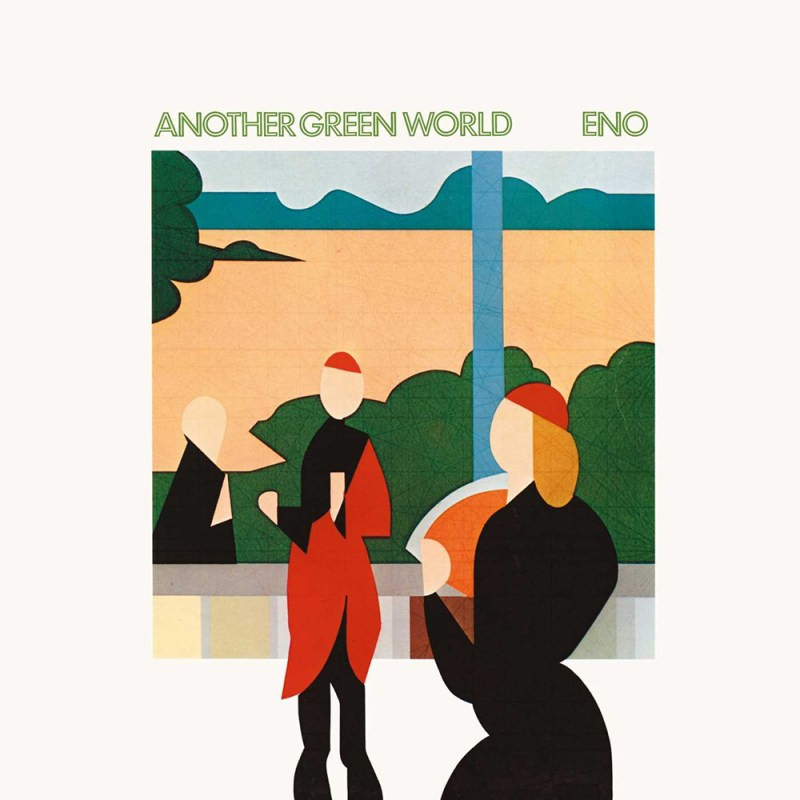
In 2020, in the depth of the pandemic, I took on a project of reviewing all 500 of Rolling Stone’s “500 Greatest Albums of All Time.” It was an excellent distraction from the state of the world at the time. I am making my way through the list again, from #500 to #1, this time sharing my reviews of each album.
Brian Eno, 1975
On his third solo LP after leaving Roxy Music1, Brian Eno starts to explore the sounds and techniques that would influence countless artists for the next few decades. The scope of this album is remarkable - there’s fairly straightforward Kinks-style British folk-pop (“I’ll Come Running”) and “St. Elmo’s Fire” sounds like something Peter Gabriel would put out a decade later. Then there’s “Sky Saw,” sounding like a prequel to Bowie’s Low2, released a couple of years later (and produced by Eno)3. On “Over Fire Island,” Eno predicts Thom Yorke’s 2013 supergroup Atoms for Peace, specifically “Ingenue.”
At first, this was what I heard: building blocks for the electronic and digital age that was to come, from Devo to My Life in the Bush Of Ghosts, Passengers and McCartney’s The Fireman project, Kid A and finally Bowie’s Black Star. Oddly, I didn’t hear as much of the ambient works that are now closely associated with Eno with albums like 1978’s Ambient 1: Music For Airports - instrumental tracks like “Becalmed” and “Zwainul/Lava” nod in that direction, but for the most part this is an “active” album, engaging the listener rather than enhancing the background noise, as is the goal of ambient music (Dusty Henry’s book 20th Century Ambient is an excellent resource!).
“The Big Ship” is a fascinating track, holding the tension between melodic and ambient, as does the closer “Spirits Drifting.” The instrumental tracks (9 out of 14) are indeed haunting, leaving enough space for the listener to fill in for the lack of lyrics with thoughts of their own. The sparse melodies and slightly metallic percussion and synths are spartan in places but lush in others, and Eno’s vocals are pop-centric and uptempo.
Additional listens bring more depth. “Golden Hours” reveals more each time. This album is not a collection of early influences but an idea of what music can be, and what instruments can be regardless of what you think they might be for. Eno plays “digital guitar” and “treated rhythm generator” and “electric percussion.” But for all of that, it’s a fantastic vision of glam and prog rock revealing the edges of artistic expression for the next 50 years. He’s showing you the boundaries he’s going to push.
Roxy Music’s Avalon is #336
Low is #206
Eno played on Low, but was not a producer.
Equal to what Kind of Blue was in jazz.
Absolutely brilliant record. Never gets old.
a common misconception: Brian Eno has nothing to do with the production on David Bowie's Low (or any of the Berlin trilogy), which are all produced by Bowie and Visconti!