
#342: Let It Be
Revisiting Rolling Stone’s “500 Greatest Albums of All Time” (2020)

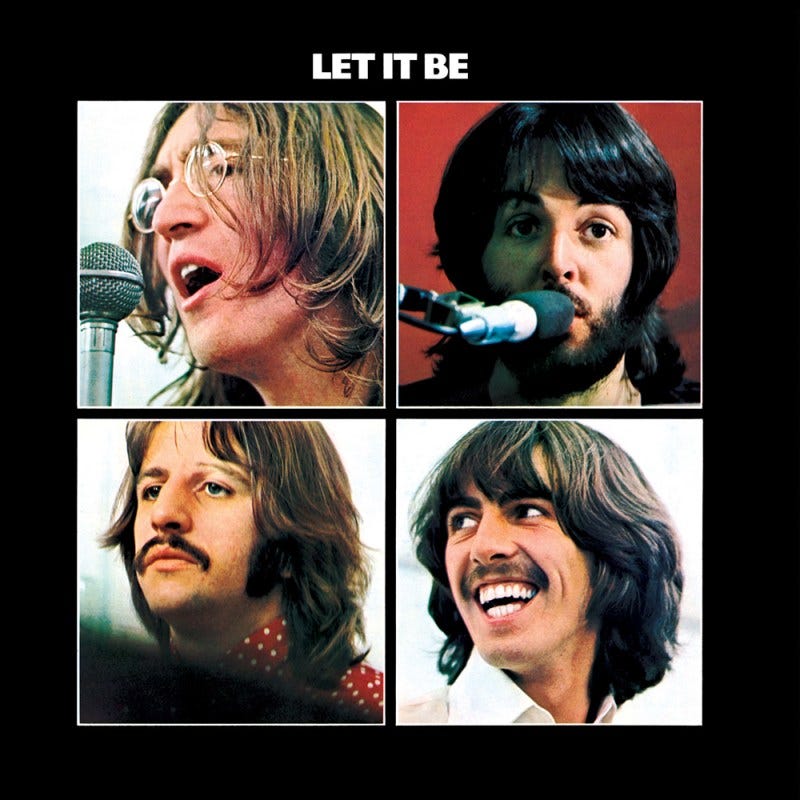
In 2020, in the depth of the pandemic, I took on a project of reviewing all 500 of Rolling Stone’s “500 Greatest Albums of All Time.” It was an excellent distraction from the state of the world at the time. I am making my way through the list again, from #500 to #1, this time sharing my reviews of each album.
The Beatles, 1970
This is the lowest ranked of the 9 Beatles albums to appear on this list1 (they only have 12 studio albums, for an incredible 75% of their studio output represented2). This one has some obvious all time classic songs: “Let It Be,” “Get Back,” “I’ve Got a Feeling,” “The Long and Winding Road,” “Across the Universe.” Released after Abbey Road (#5) but recorded beforehand, these songs were “over-produced” by Phil Spector against McCartney’s wishes and released after they had announced the breakup.
The drama going on beneath the surface of these songs is palpable; the friction between the band members during these sessions is common knowledge. These are more like a collection of solo songs than any other Beatles album, which makes the album as a whole a little inconsistent, comparatively. Yet the songs are all brilliant, despite the lack of cohesion. “Get Back” in particular gets better with each listen, and “I’ve Got a Feeling” is incredible. “One After 909,” a song that had been around since their Quarrymen days, is a great addition, and, of course, the title track is an all-timer.
The release history of this album is also the most varied of all Beatles UK studio albums (the US release history is a whole other story). The band had a ton of film for a planned TV special and live show that never materialized, but a film was coming out of that footage. The resulting theatrical release, Let It Be, has mixed reviews and was mostly ignored by the band itself, but the accompanying album was also then set for release at the same time. John and George, who had been working with Phil Spector on their own solo projects, invited him to finish the production on the album. He notoriously added strings and vocal chorus to “The Long and Winding Road,” “I Me Mine,” and “Across the Universe.” George Martin’s producer credits were removed from those songs and replaced by Spector.
In 2003 Paul organized a remix and re-release of the album without the overdubs and strings, called Let It Be… Naked (do I wish they had chosen a better title? Yes, yes I do). It’s a much different album than the 1970 release, brining new energy to some of the tracks, removing the studio jams “Maggie Mae” and “Dig It” and adding “Don’t Let Me Down,” which was released as a B-side to the “Get Back” single. Again in 2021 another mix was released from the master tapes to coincide with Peter Jackson’s film The Beatles: Get Back, cleaning up the tracks further and providing what I feel is the definitive version of this album.
This album changed for me after seeing Peter Jackson’s Get Back. It provided so much more of the context around these songs and gave equal weight to all four members of the band, spreading equal culpability too (except to Ringo, who is always a delight), whereas the normal mythology surrounding this album is that it was Paul who pushed this one through at the expense of the others, and at the cost of the band. One wonders what would have happened if they had not rushed the recordings and instead come together in the studio as they normally had for their albums.
Full disclosure: “Across the Universe” is my favourite Beatles song. It was the first song that shifted something in my being; this was the first song I remember thinking was more than just a song, it was a force, connecting me with something greater, creatively. It was hard to fathom that it this was created by someone rather than just always having existed. Maybe it was the tambora that George played; or maybe it was John’s voice, so delicate; or maybe it was the relatively simple acoustic arrangement; or maybe it was lyrics, standing out to me a different from the usual song lyrics: “Images of broken light which dance before me like a million eyes / They call me on and on across the universe.” But my first thought, every time, is of the version on Past Masters, Volume 2. Released in 1988 on cd, it collected the non-album cuts from the band. Volume 1 starts with “Love Me Do” and ends with “I’m Down,” and Volume 2 starts with “Day Tripper” and ends with “You Know My Name (Look Up My Number).” Originally released as two separate cds, I only knew Volume 2 - for whatever reason, my dad did not buy Volume 1, and so my Beatles knowledge of songs prior to 1965 would have to wait.
But on Volume 2, there was “Rain,” “Old Brown Shoe,” “Paperback Writer,” the uptempo single version of “Revolution,” “Hey Jude,” “The Ballad of John and Yoko,” and “Don’t Let Me Down.” These are my favourite Beatles songs - “Rain” brings me particular joy, and I will never get tired of “Hey Jude” despite everyone else having been over it for decades. But it also included the “Wildlife” version of “Across the Universe,” an addition to a World Wildlife Fund charity compilation from 1969. It starts with various bird songs and then wings flapping as a bird lifts off the water. It’s also noticeably faster than other versions, with John’s voice higher in tone and creating a more jaunty version rather than the more contemplative album version, which was slowed down by Phil Spector, or the almost-melancholy acoustic take from The Beatles Anthology. It’s seared into my being forever, those wings flapping, and it will forever cement John Lennon as my favourite Beatle, though only by degrees.
It’s also a song that is notoriously difficult to cover. Other versions just sound like karaoke: as well as Rufus Wainwright (his voice is impeccable but the arrangement is hardly different), Fiona Apple (which does not feature piano for some reason), or Jim Sturgis perform it, it’s merely a reminder of the original. Evanescence released a version in 2021 that is pretty good - Amy Lee is a remarkable singer - but it doesn’t sound like Evanescence at all, which would have been more interesting. A noticeable exception is David Bowie’s intense version from Young Americans. He truly has a gift for interpretation, and he makes this one his own, too: it’s slightly angry, which is a unique take on this song. It also features Lennon on acoustic guitar and backing vocals, as they recorded it in the same sessions as “Fame.” It was nearly universally panned, but I enjoy it.
Let It Be is full circle Beatles. It includes some of their best and most well-known songs, songs that throw back to their beginnings, and songs recorded on the Apple Corps Headquarters rooftop, representing their final live performance. Yet it was released after they had officially broken up, the final document in their storied, 7-year recording career.
Coda
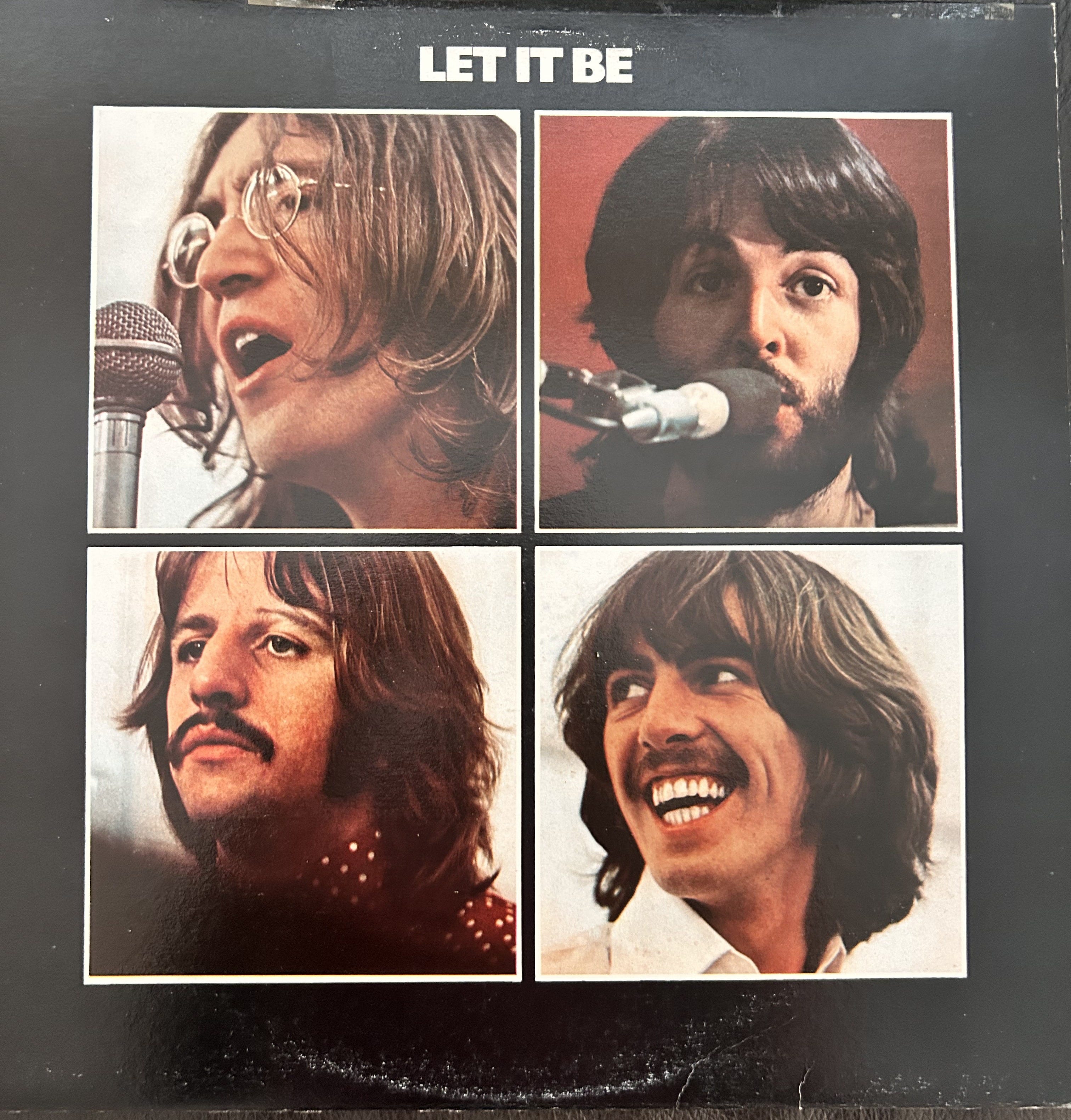
I am truly grateful to be in possession of an original copy of this LP, SOAL-6351, produced in Canada 1970. My dad is a true collector of vinyl, and this one is simultaneously well-played and well-preserved. Listening to it on vinyl is fantastic, and I don’t seem to mind the superfluous strings on “I Me Mine” as the guitar solo on “Let It Be” sounds as good as any Harrison has ever played. This is a great album, better on vinyl.
Meet The Beatles! was a US-only release from 1964, comprising of tracks from With The Beatles but swapping out the cover songs for three singles. Meet The Beatles! is #197.
The albums not represented are Please Please Me, Beatles For Sale, and Yellow Submarine. Magical Mystery Tour was an EP in the UK and padded LP in the US.
Great post, Garry. While it is no surprise this is on the RS list, it does surprise me it is ranked so low, despite its “overproduction.” It sits as my second favorite Beatles album behind Revolver, and after watching the Get Back documentary, I love it even more. I did like Paul’s stripped down version and have been looking for that on vinyl, but it commands a pretty high price these days. I’m hoping Sir Paul will choose to reissue that one.
P.S. I also never get tired of Hey Jude.